🎣 Check out our universal aluminum bases


How to Catch Flathead and Shovelhead Catfish at Night
Flathead night guide
Use this guide to plan flathead and shovelhead night fishing around cover, bait, safety, and reachable rod-holder setup.
- Start with cover, current, and the feeding window.
- Keep night safety and rod reach ahead of extra lines.
- Route bait, species, and setup links after the fishing problem is clear.
Learning how to catch flathead catfish at night starts with a simple truth: a night bite is not magic. Flatheads and shovelheads still use cover, current edges, bait movement, water level, and feeding windows. Darkness changes what the angler can see and reach, so the setup has to be more deliberate than a daylight run-and-gun plan.
This guide keeps the flathead lesson practical. Pick the cover or edge first, make the bait and rig match that lane, then set rods where the angler can reach them without stumbling through a dark boat deck or rough bank.
Start with cover, current, and the feeding window
Flatheads and shovelheads are often treated like they are only a night fish. Night can be a strong feeding window, but the better question is why that fish would move. A wood edge, rock seam, outside bend, shallow flat near deeper water, creek mouth, or bank current break can all be part of the answer when bait is moving and the fish can feed without fighting the whole river.
Wood or logjam cover
Fishing questionCan the bait sit close enough to the fish without burying in the cover?
Safer setup responseKeep the rod reachable, use controlled pressure, and do not anchor or stand where a hooked fish can pull the setup into danger.
Outside bend or current edge
Fishing questionIs bait moving across a travel lane or sitting dead behind it?
Safer setup responseUse the current edge, then adjust weight, leader, and rod angle before moving to a new spot.
Bank access after dark
Fishing questionCan the angler cast, see the rod, and land the fish without unsafe footing?
Safer setup responseClear the path in daylight, keep lights ready, and avoid steep or unstable banks that become worse at night.
Cold front or winter edge
Fishing questionAre fish likely to move only a short distance?
Safer setup responseSlow the presentation and use the winter pattern as context instead of forcing a summer night plan.
Barge lane or boat traffic
Fishing questionCan the boat stay visible and safe while fishing the edge?
Safer setup responseGive traffic room, use lights, and move before a fishing spot overrides safety.
Flatheads and shovelheads are not blue cats with a different name
Blue cats often make it easier to talk about big current lanes, ledges, and bait movement. Flatheads and shovelheads can use those same rivers, but the night conversation needs more attention to cover, shorter feeding moves, and the exact path from bait to rod to landing space. A bait sitting near the right wood or edge is useful. A bait that drifts into a tangle, spins in current, or leaves the angler no landing room is not.


Bait and rigging for night flatheads
Bait choice should match the fish and the rules for the water being fished. Live bait, fresh cut bait, skipjack, shad, or other legal bait can all be part of the conversation, but the bait has to stay believable in the lane. Oversized bait in the wrong current is still the wrong bait.
Use Catfish Bait and Rigging Guide for the broad bait workflow, Best Catfish Rigs for Rivers when the weak point is leader, sinker, or presentation control, and How to Catch and Prepare Skipjack for Catfish Bait when cut bait size, storage, and freshness are the main questions.
Safety guardrails for fishing after dark
Night fishing adds risk before it adds fish. Check weather, water level, boat lights, batteries, anchors, PFDs, bank footing, and the landing path before the first bait goes out. Keep rods visible, keep the deck or bank path clear, and avoid setting a spread that forces an angler to reach across open water, traffic, rocks, or loose shoreline in the dark.
Local rules can change by state, waterbody, season, bait type, rod count, access point, and harvest rule. Confirm the current rules for the exact place being fished before copying any night setup.
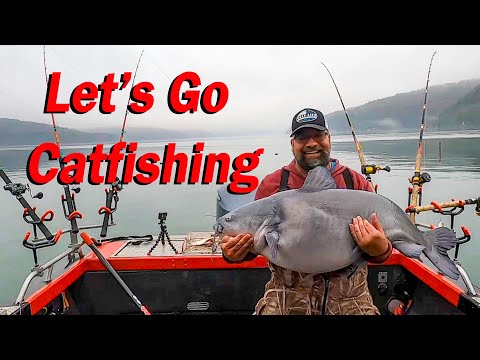
Rod-holder setup after the target lane is clear
Gear belongs after the fishing job is clear. Stable rod holders and the right rod-holder bases can help keep a night spread organized when baits are soaking near cover or current. anchors matter when boat position is the real presentation decision. HydroWeb landing nets belongs in the plan when a big fish has to be landed cleanly in low light.
Use Complete Guide to Catfishing Rod Holders and Boat Setup for the broader boat and holder setup guide. Use Bank Fishing for Catfish when the night plan is from shore and rod visibility, ground conditions, and the landing path are the limiting factors.
Where this flathead night guide fits
- For the broader species resource branch, use Species Guides.
- For bait and rigging decisions, read Catfish Bait and Rigging Guide.
- For river current, structure, anchoring, and boat-control decisions, read River Structure and Boat-Control Tactics for Trophy Catfish.
- For Ohio River examples, read Ohio River Catfishing Guide.
- For cold-water blue cats and flatheads, read Winter Catfishing Patterns for Blue Cats and Flatheads.
- For the full rod-holder setup guide, read Complete Guide to Catfishing Rod Holders and Boat Setup.
Fish the night plan, not the rumor
A good flathead or shovelhead night trip is built from the water in front of the angler: cover, current, bait, safety, rod reach, and landing room. Start with the most believable feeding lane, fish it cleanly, and change the weakest part of the setup before turning one night story into a rule.